

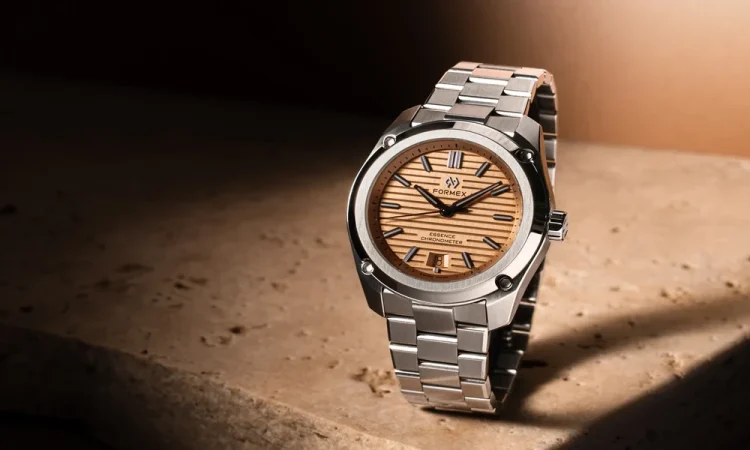
Reproducing a luxury timepiece goes beyond replicating the dial. Captures the proportions, surfaces, and decorative details that make each original unique. It depends on how each component is crafted whether the thickness or position of the hour markers changes the overall appearance. In discussions about reptime watches, attention often centres on how modern replicas achieve such close visual similarities. Analyzing an original design, translating its measurements into manufactured components, and applying finishes that reproduce its distinctive appearance. The finished watch resembles the reference timepiece as each stage builds on the previous one.
How is design accuracy achieved?
In order to begin the process of remaking the watch, we must first examine its proportions. A watch’s case diameter, thickness, lug curvature, as well as the size of the bezel all have an impact on how it looks when it is worn on the wrist. To identify these measurements, manufacturers may study physical examples of the products alongside detailed photographs in order to reproduce the relationships between different components and accurately reproduce the measurements.
It is only after this process has been completed that digital modelling can be carried out to convert the design into individual parts. Using computer-aided design software, it is possible to develop case profiles, crown positions, and bracelet connections with consistent dimensions as a result of computer-aided design software. Due to the fact that the parts must fit together while maintaining the intended appearance, this preparation is particularly useful in this case.
Precision machining transforms those digital designs into physical components. Computer-controlled equipment shapes metal cases, creates openings for crystals and crowns, and produces the edges and curves associated with the original design. Accurate machining provides the foundation for finishing work.
What makes details look authentic?
The key to making luxury watches stand out from other watches is to recreate the key elements of their design, such as textures, colors, and reflective surfaces, in order to reproduce the key aspects of the watch’s design. Despite having accurate dimensions, a case whose polished edges or brushed surfaces differ from that of the reference may still appear to have a noticeable difference in appearance despite having accurate dimensions.
- Surface finishing therefore plays a crucial role. Polishing produces smooth, reflective areas, while brushing creates fine directional lines across selected surfaces. The transition between these finishes defines the case and bracelet shape.
- Dial production introduces further detail. Applied hour markers create depth, while carefully printed minute tracks establish the layout. Manufacturers may also reproduce textured dial surfaces, coloured accents, and luminous coatings to capture the original design’s appearance under different lighting conditions.
- Complexity is added by bezel construction. The watch manufacturer may replicate engraved numerals, colored inserts, or rotating mechanisms. Even small alignment differences can affect a watch’s overall resemblance.
- Bracelet links and clasps complete the exterior design. Their shape, spacing, and surface treatment influence how naturally the bracelet connects with the case.
From components to complete watches
After manufacturing and finishing, the individual parts must be assembled into a complete watch. This stage brings together details established during design and production, making component alignment especially important. The dial is fitted inside the case, followed by the hands and crystal. Each element must sit at the correct height and position. The movement is selected to accommodate the intended display, whether the watch includes a date window, chronograph counters, or an additional time-zone hand.
Manufacturers also attempt to reproduce the original watch’s bracelet attachment and crown arrangement. These connections play a significant role in the silhouette, particularly when viewed from the side. Modern production methods make detailed reproduction possible, but results vary according to manufacturing precision and component quality. Two replicas based on the same luxury design may differ in their proportions, finishing, or functional details.
Replica watches are made by measuring, digital modeling, manufacturing components, and finishing them to replicate luxury timepiece designs. It all comes together with accurate proportions, decorative techniques, and assembly. When a replica follows the reference design closely, it appears more faithfully.