

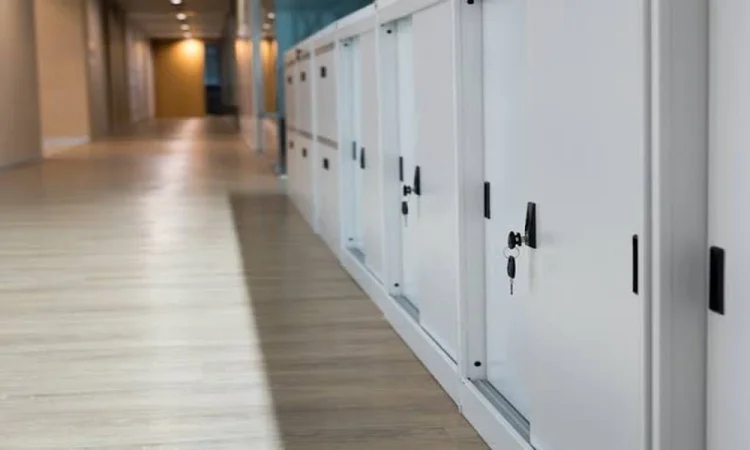
Storage organisation is often framed purely as a tidiness issue, when in a workplace handling tools, chemicals or shared equipment, disorganised storage is frequently a genuine safety issue, incompatible items stored together, blocked access to emergency equipment, or unsecured heavy items at risk of falling. Approaching industrial storage lockers as a safety decision, not just a storage one, changes what actually matters when choosing and arranging them.
Why Organisation Is a Safety Issue, Not Just Tidiness
Cluttered or poorly organised storage slows emergency response, increases the risk of items falling or being knocked over, and makes it harder to notice when hazardous materials are stored incorrectly. Treating locker organisation as part of a workplace’s overall safety planning, rather than a purely aesthetic or space concern, shifts how storage decisions actually get made across the whole facility, not just in the areas an inspector is most likely to check.
Segregating Hazardous and Non-Hazardous Storage
Chemicals, flammable materials, and general equipment should be stored in clearly separated lockers, since incompatible substances stored together, even in sealed containers, create unnecessary risk if a container is ever damaged or leaks unexpectedly. Dedicated hazardous storage lockers, clearly labelled and physically separated from general storage, are a small investment relative to the risk they reduce over time.
Locker Labelling and Access Control
Clear, consistent labelling indicating locker contents and any hazard classification lets staff and emergency responders identify contents quickly without opening every locker, which matters considerably during an actual incident rather than routine daily use. Restricting access to certain lockers through keyed or coded locks further limits who can retrieve or store hazardous items in the first place.
Ventilated Lockers for Flammable Materials
Flammable materials require ventilated storage that prevents the buildup of vapours inside a sealed locker, a specification that a standard, fully enclosed locker does not provide regardless of how sturdy its construction otherwise is. This is a specific compliance requirement worth confirming directly with a supplier rather than simply assuming any heavy duty locker automatically qualifies for this particular use.
Weight Distribution and Anchoring Requirements
A tall storage locker loaded unevenly, heavier items placed high rather than low, creates a tipping risk that anchoring the unit to a wall or floor largely eliminates. Anchoring is a simple, low-cost step that is nonetheless frequently skipped, particularly for lockers installed after an office or workshop is already in daily use and busy.
Choosing Between Steel Gauges for Industrial Use
An industrial locker handling genuinely heavy tools or equipment needs a thicker steel gauge than a locker used mainly for paperwork or light personal items, and the price difference between gauges reflects a real difference in load tolerance rather than an arbitrary markup. Asking a supplier directly for the gauge specification, rather than relying on the word industrial in a product name alone, avoids paying industrial pricing for a locker that is not actually built to an industrial standard underneath its finish and coating.
Fire Rating and Materials That Resist Heat
Certain workplace materials, particularly some chemicals and flammable liquids, require storage in a locker with a specific fire rating, which is a distinct specification from general steel thickness and needs to be checked separately against what is actually being stored. A locker that is otherwise heavy duty but lacks the appropriate fire rating does not meet the requirement for these specific materials no matter how sturdy it feels, and substituting one specification for the other is a common and entirely avoidable oversight that a proper supplier consultation would normally catch before an order is placed.
Personal Protective Equipment Storage
Dedicated, clearly marked storage for personal protective equipment keeps it accessible and in good condition, rather than mixed in with general tools where it can be damaged or simply overlooked when actually needed. Locating this storage near the point of use, rather than in a distant general storage area, also improves the likelihood staff actually use the equipment consistently every single shift.
Compliance Considerations for Shared Facilities
Shared workshop or warehouse facilities used by multiple businesses often have specific requirements around hazardous storage segregation and signage set by the building management or relevant safety authority, and confirming these requirements before ordering lockers avoids a compliance gap discovered only during an inspection. This is worth checking directly with the building management rather than assuming standard practice is automatically sufficient for every tenant.
Reducing Clutter-Related Workplace Incidents
A meaningful share of workplace slips, trips and minor injuries trace back to items stored improperly or left out because dedicated storage was inadequate or inconveniently located, which is a preventable cost that well-planned locker storage directly addresses. Tracking incident patterns before and after a storage reorganisation often makes this benefit concretely visible to management over a reporting period.
Organising for Safety, Not Just Storage
Choosing industrial storage lockers with safety as the primary consideration, proper segregation, ventilation where needed, secure anchoring and clear labelling, produces a workplace that is measurably safer, not simply tidier looking. This framing changes which specifications actually matter when comparing locker options, well beyond capacity and price alone.